Choquequirao Tours
Choquequirao Tours & Tickets
#22 of 304 in Choquequirao
Official tickets & experiences

Choquequirao Tours & Tickets

Past the canyon's edge, the terraces wait in silence.

Hand-picked by our editors — only the best 5 treks from 312 reviewed.

4.7 (2,400) 41K+ travelers chose this
Open today 06:00 – 17:00
Attendance: Light — dry season weekday morning
June is peak dry season; afternoon temperatures rise sharply — start exploring by 06:00 to cover terraces before midday heat.
Free cancellation Instant confirmation Mobile voucher Verified partner Book now, pay later
Tickets

Choose your Choquequirao tickets

Verified partners for Choquequirao tours, free cancellation where available, and instant confirmation on every booking.

Choquequirao 4-Day Private Trek: The Lost Inca Citadel 96 hr
Guided Experience

Choquequirao 4-Day Private Trek: The Lost Inca Citadel

4.7
€472
per person
Instant Mobile voucher Flexible — change up to 24h

Four days of raw Andean adventure to a crowd-free Inca citadel deep in the Apurímac Canyon.

Reserve
Choquequirao Trek: 3-Day Expedition to the Lost Inca City 72 hr
Premium Combo

Choquequirao Trek: 3-Day Expedition to the Lost Inca City

4.2
€476
per person
Instant Mobile voucher Flexible — change up to 24h

Hike into the Andes to reach Choquequirao, a vast Inca citadel fewer than 1% of Peru's visitors ever see.

Reserve
Choquequirao Trek: The Lost Inca City – 5 Days / 4 Nights 120 hr
Luxury / Private

Choquequirao Trek: The Lost Inca City – 5 Days / 4 Nights

4.2
€485
per person
Instant Mobile voucher Flexible — change up to 24h

A challenging 5-day Andean trek to Choquequirao, the remote Inca citadel few travellers ever reach.

Reserve
Choquequirao 5-Day Trek: Lost City of the Incas 120 hr
Standard Entry

Choquequirao 5-Day Trek: Lost City of the Incas

5 (2)
€691
per person
Instant Mobile voucher Flexible — change up to 24h

A 5-day Andean adventure to the remote 'Cradle of Gold' — Machu Picchu's lesser-known twin.

Reserve

Prices from verified partners. Availability updates in real time at checkout. Free cancellation policies apply where shown.

Duration
4-day trek recommended
Languages
Spanish, English, Quechua
Group size
Up to 12 trekkers
Cancellation
Free up to 72 hours
Exploring Choquequirao, the Sister of Machu Picchu
About

Exploring Choquequirao, the Sister of Machu Picchu

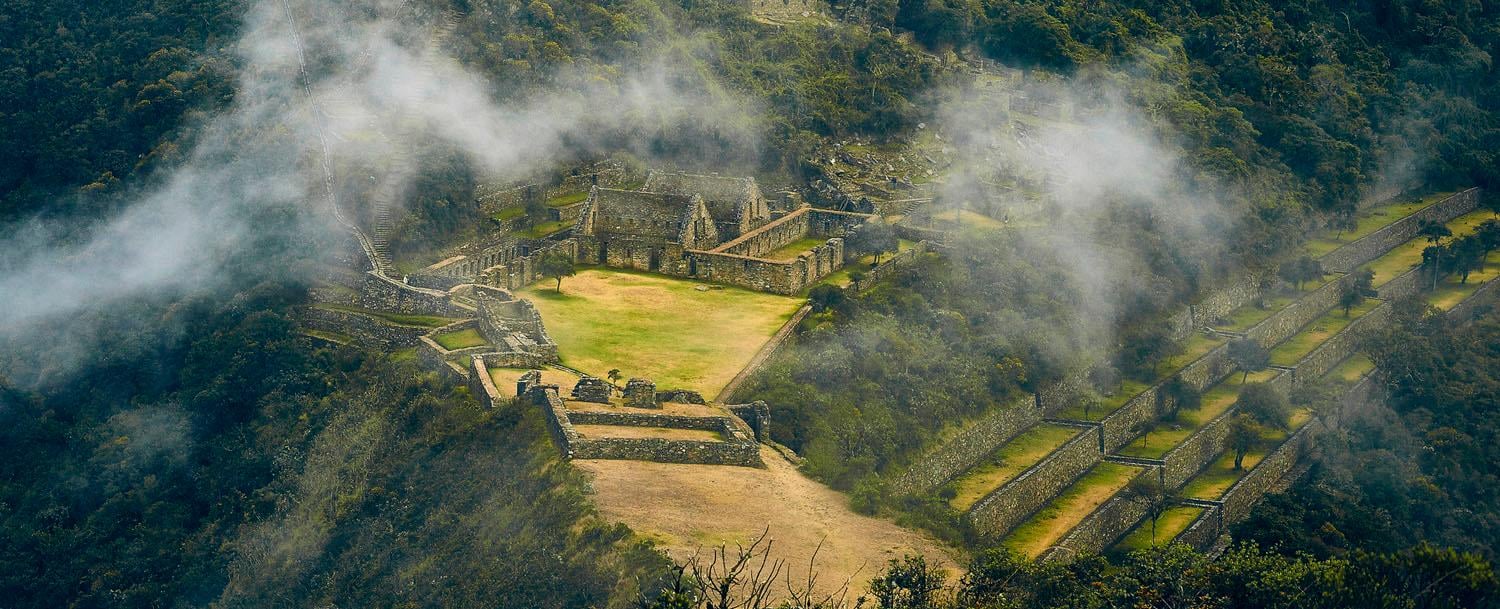
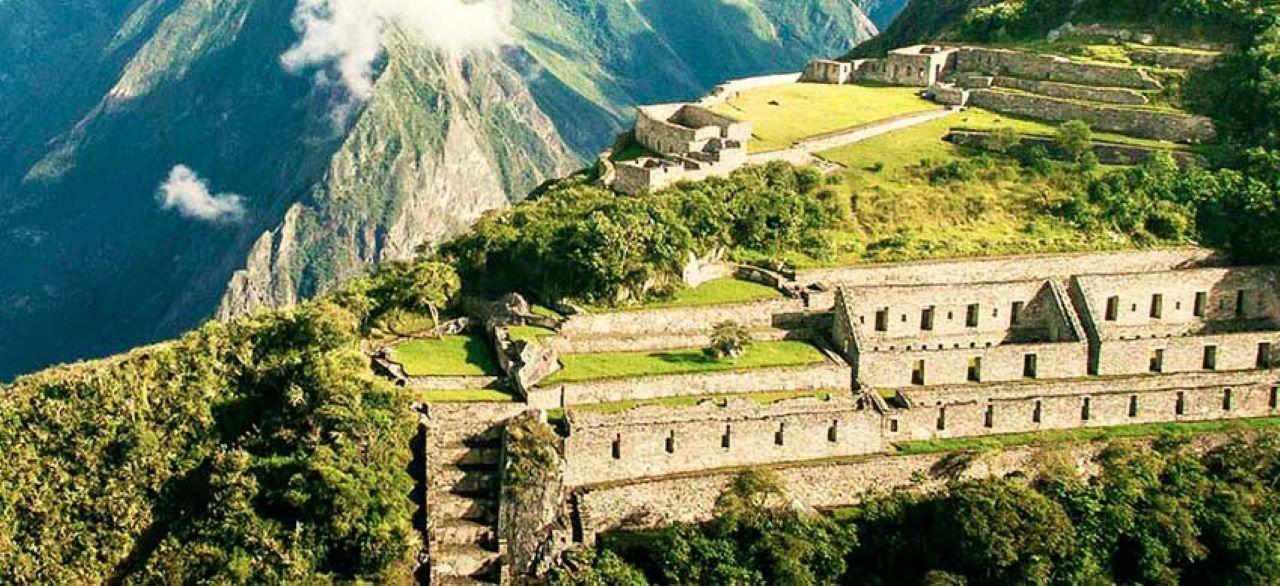
Only an estimated thirty percent of Choquequirao has been cleared from the cloud forest — the rest still sleeps beneath roots and vine. Carved into a ridge above the Apurimac canyon, the city was a royal Inca estate, its name meaning "cradle of gold" in Quechua.

Read more

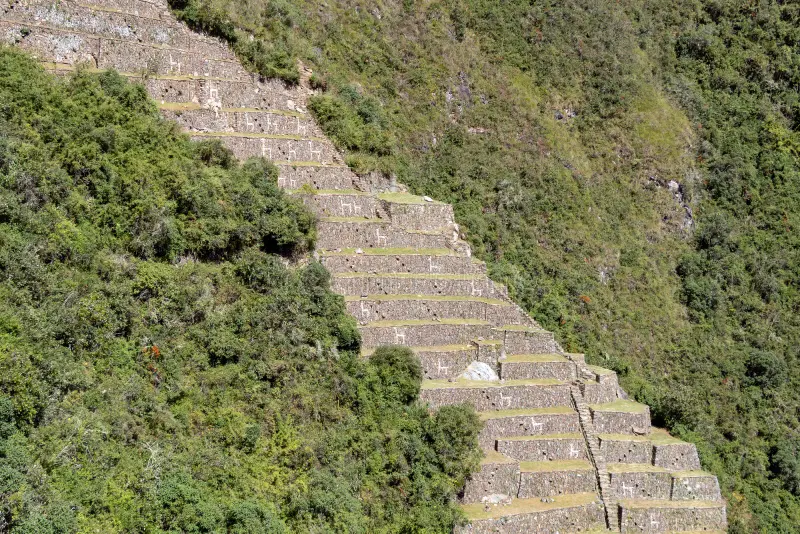
Spanish chroniclers passed it by; archaeologists reached its llama-shaped terraces only in earnest during the twentieth century.

Today the site matters precisely because it resists the crowds. With no road and no railway, access comes on foot, which keeps the ruins quiet where Machu Picchu hums. Travelers compare the two constantly — many choquequirao tours now thread a choquequirao machu picchu route, while a longer choquequirao machu picchu trek links both citadels. The choquequirao machu picchu combo rewards the patient, and choquequirao endures as the Andes once were: unhurried, ungated, half-hidden.

"The city matters precisely because it resists the crowds."
Your experience

What a Choquequirao tour day looks like

A step-by-step walkthrough of Choquequirao tickets — what you'll see, how long each stage takes, and the details that matter.

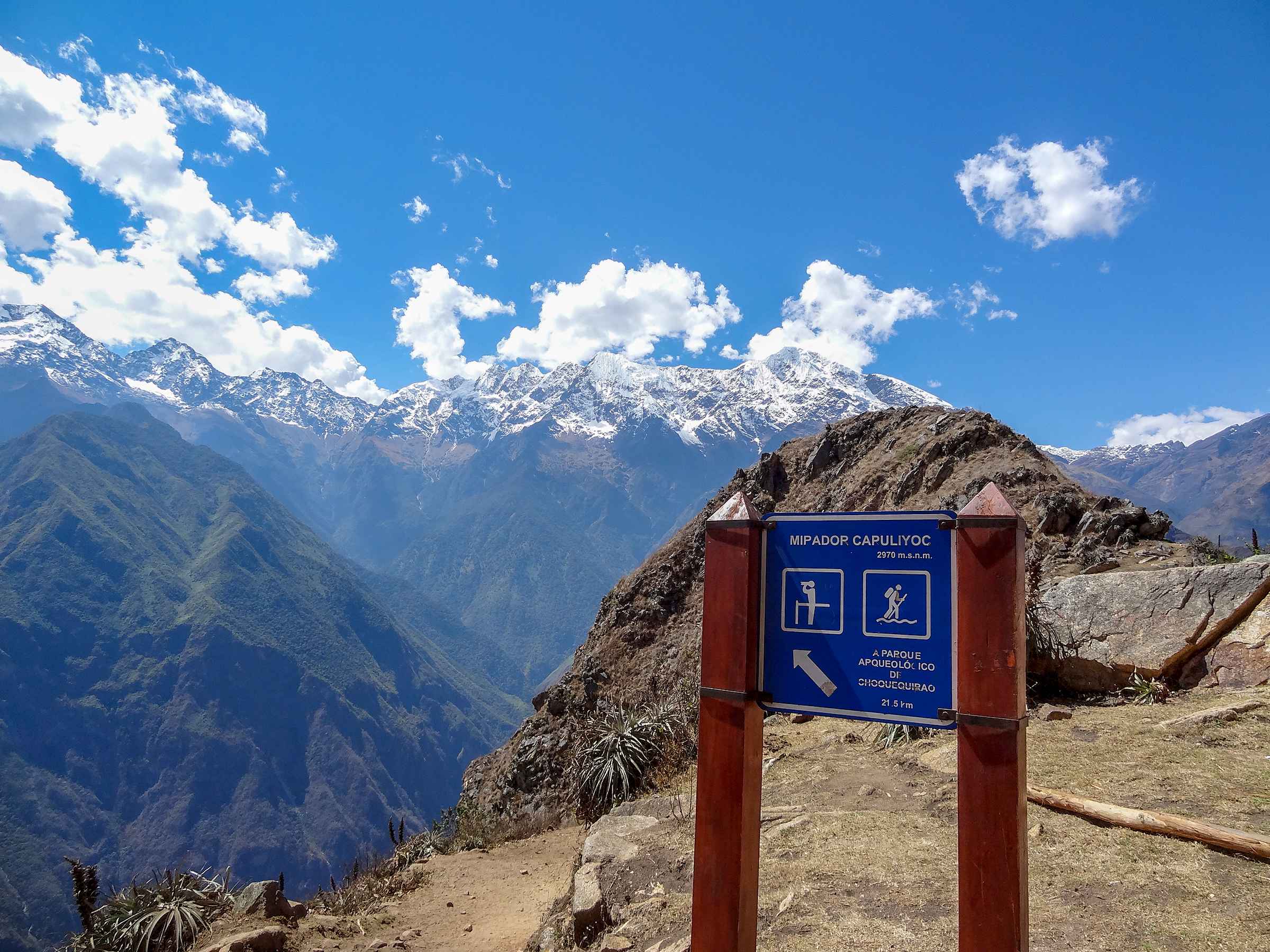
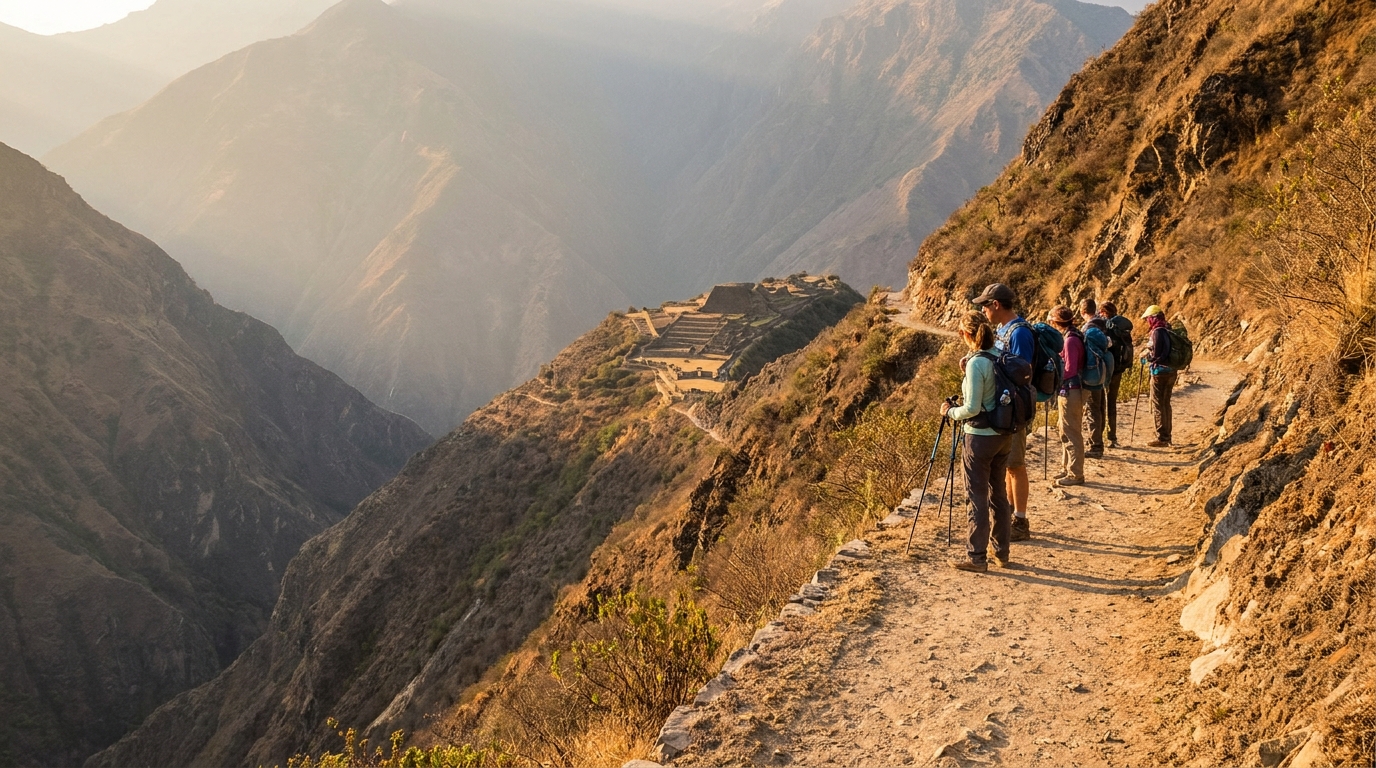
You start before dawn at the Capuliyoc checkpoint, paying the 60 PEN entrance fee in person, then drop into the canyon as first light spills across the gorge. The trail switchbacks down to the Apurimac river, then climbs — relentlessly — toward the ridge.

Read more

Aim to reach the ruins between 06:00 and 09:00, when the light is soft and the terraces stand empty.

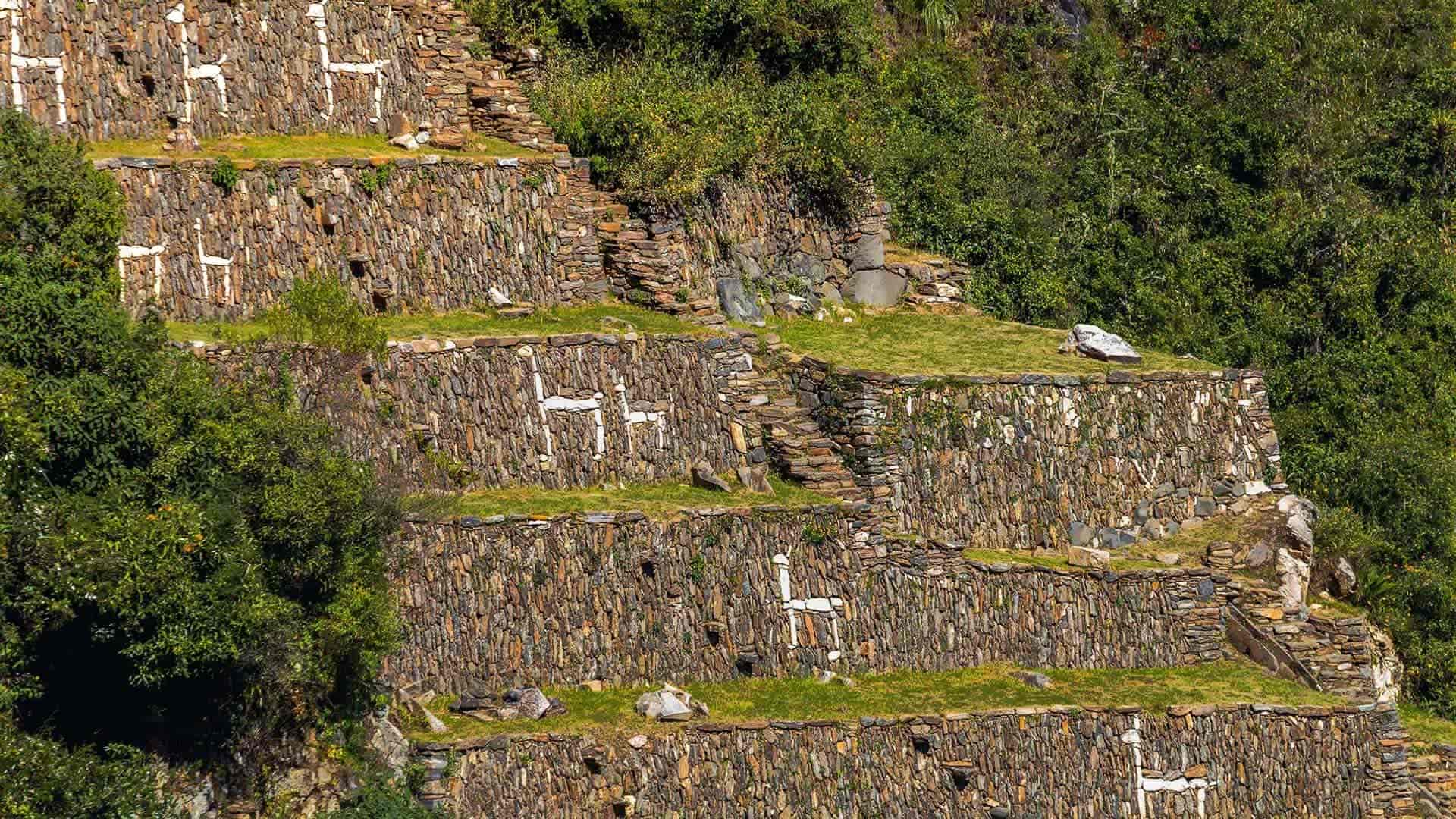
You pause at the Lower Plaza, trace the white-stone llama mosaics, and climb to the ceremonial usnu where the canyon opens beneath your boots. Guides on a choquequirao private tour explain the irrigation channels still carrying water. By afternoon you descend, legs burning, the site fading behind you. The gates close at 17:00, so you time your last climb carefully.

Your experience at Choquequirao Tours & Tickets
What you'll do

Inside a Choquequirao tour, step by step

  1. Day 1 – Cusco to Cachora
    01 4–5 hours

    Day 1 – Cusco to Cachora

    Drive from Cusco along the Abancay highway to km 148, then transfer to Cachora village (2,900 m) where mule hire and final supplies are available.

  2. Capuliyoc Viewpoint and Descent
    02 3–4 hours

    Capuliyoc Viewpoint and Descent

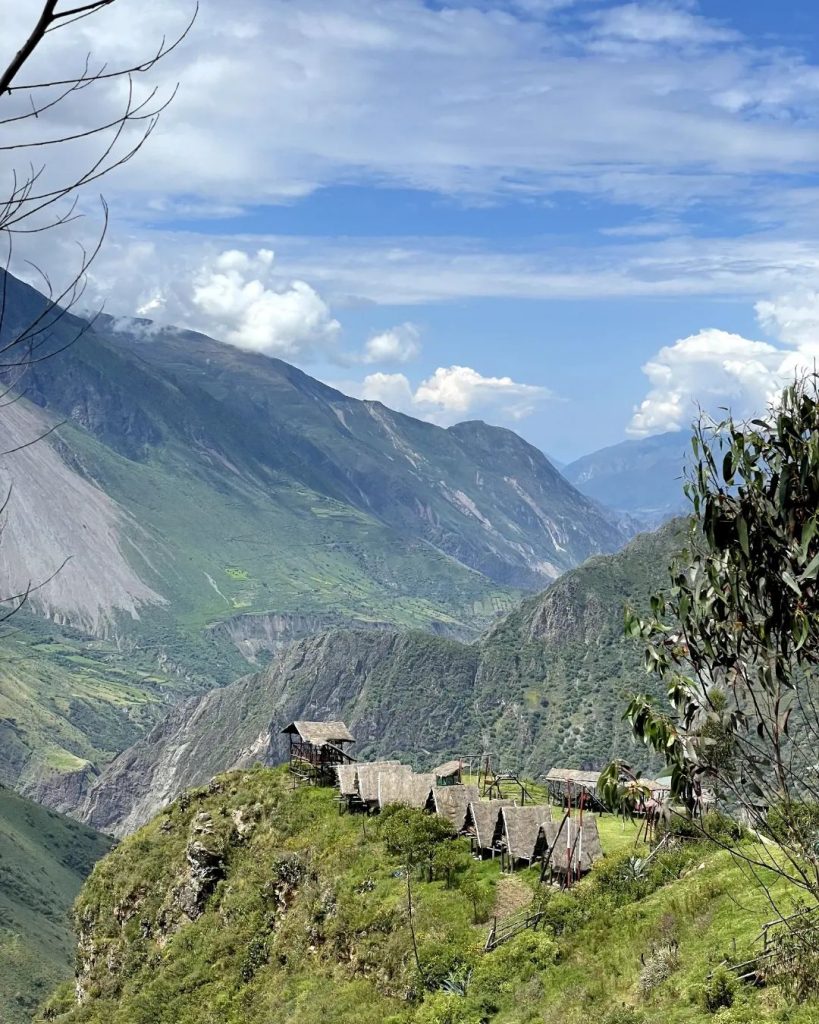
    From Cachora, trek to the Capuliyoc pass (3,000 m) for first panoramic views of the Apurímac Canyon, then descend steeply to Chiquisca camp.

  3. Apurímac River Crossing and Ascent
    03 5–6 hours

    Apurímac River Crossing and Ascent

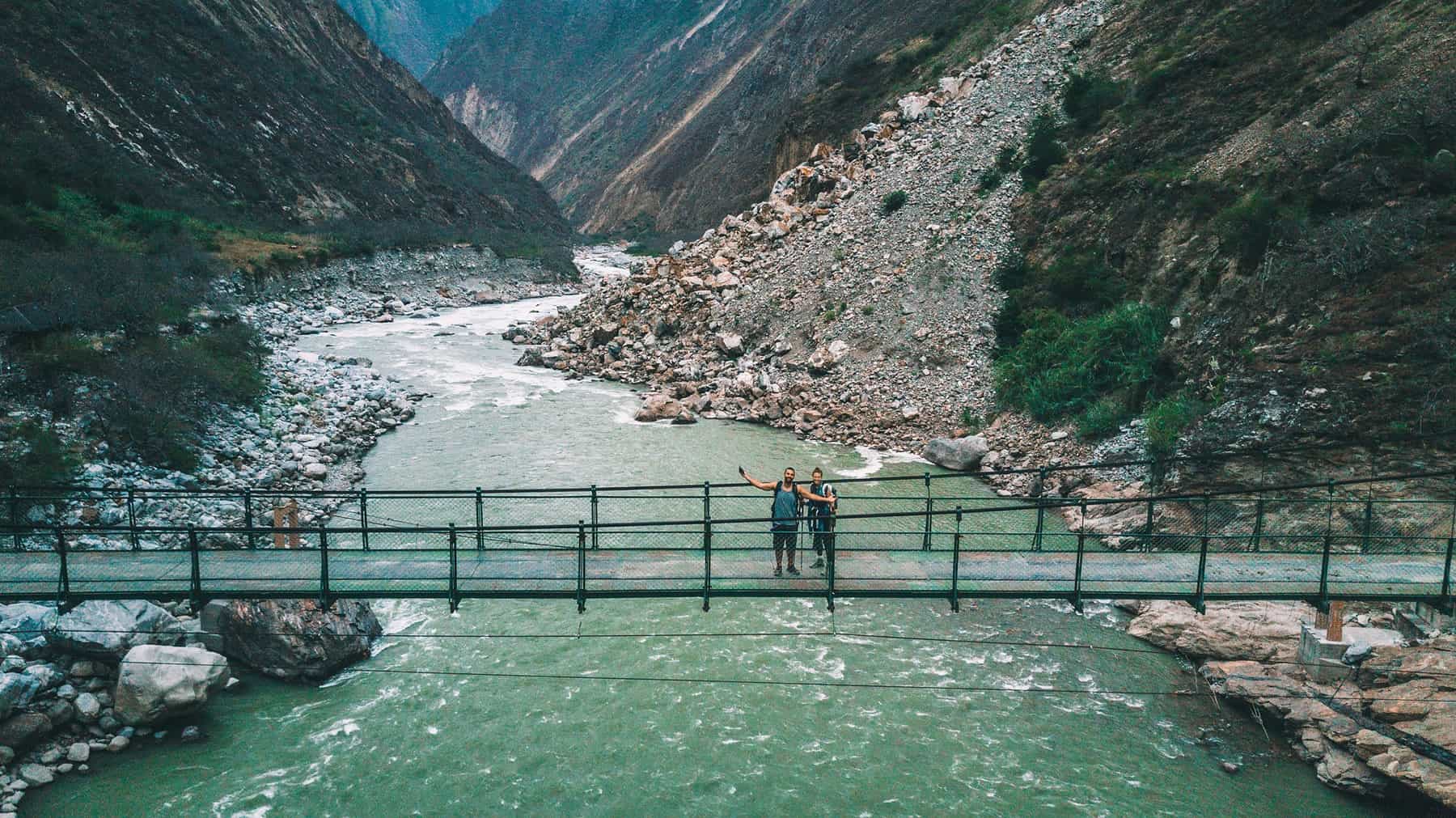
    Cross the Apurímac River at Playa Rosalina (1,500 m) and begin the demanding 1,550 m climb through cloud forest to Marampata camp.

  4. Choquequirao Ruins Exploration
    04 Full day

    Choquequirao Ruins Exploration

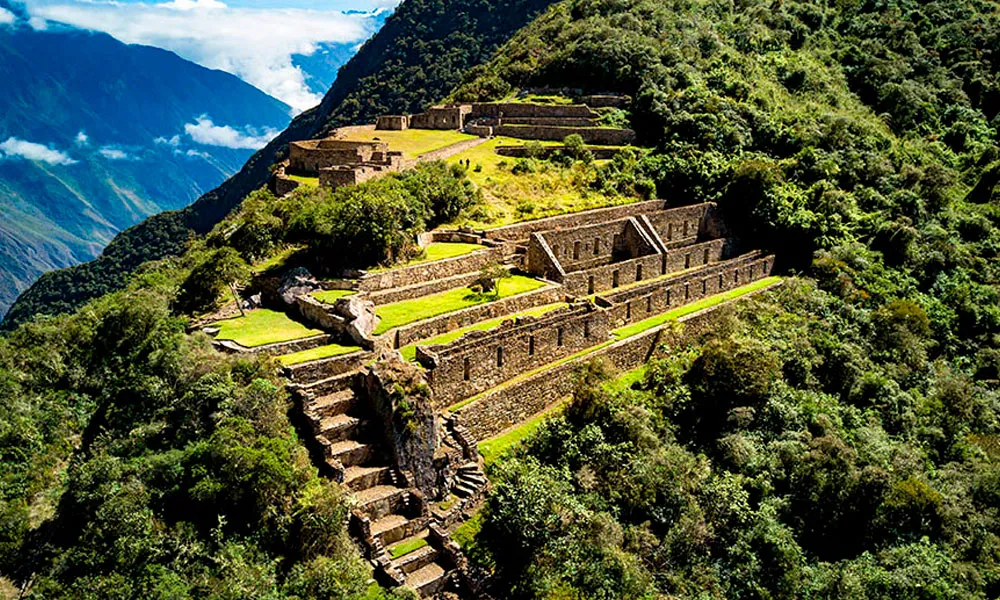
    Explore the Main Plaza, Llamayoq terraces, Ushnu platform, Capilla Hill sector, and the ceremonial water channels at the Inca citadel.

  5. 05 2 days

    Return to Cachora and Transfer

    Retrace the route via the same campsites to Cachora, then transfer back to Cusco or Abancay.

Highlights

What you'll see inside Choquequirao

The landmarks, rooms, and views travelers on Choquequirao tours remember — all visible on a single visit.

Plaza Principal (Main Plaza)

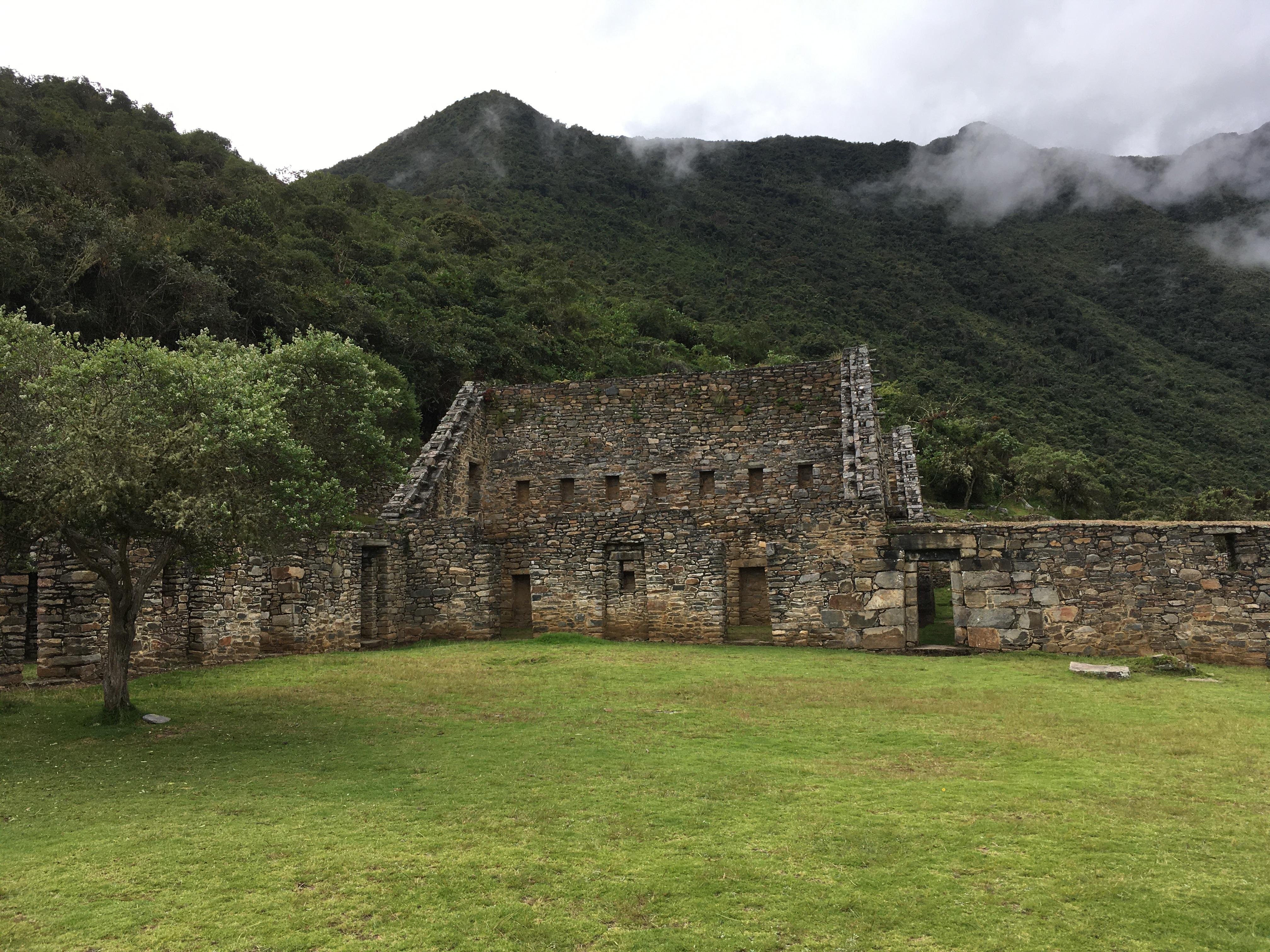
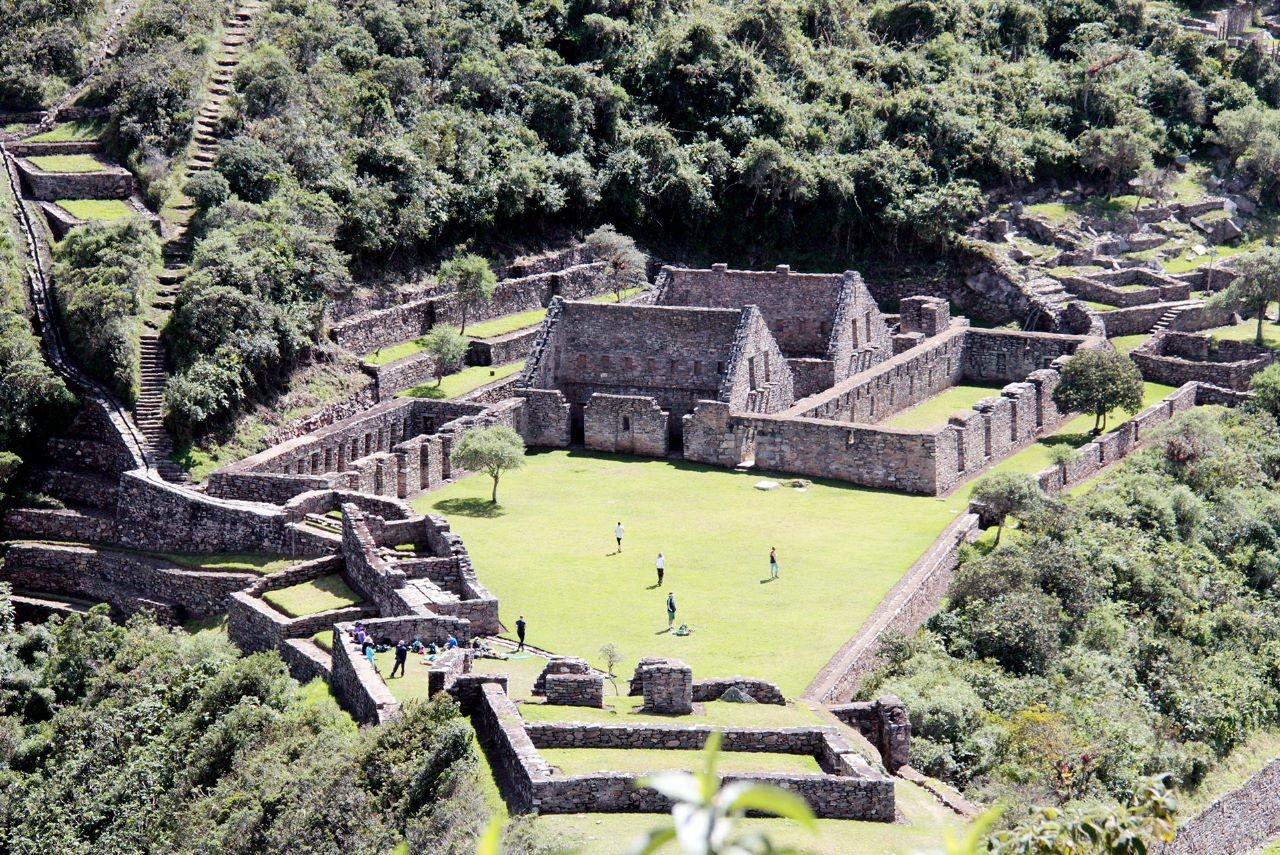
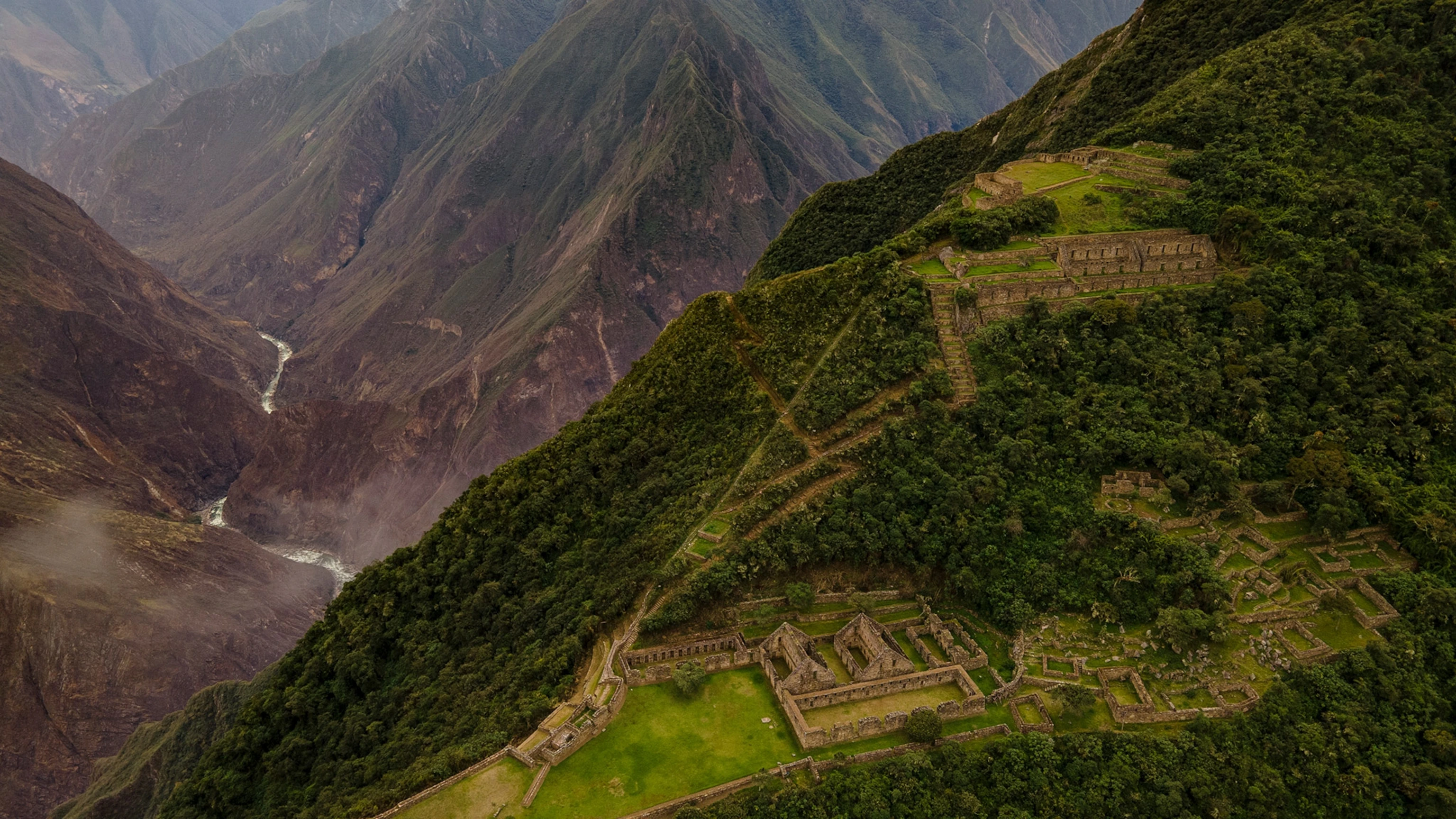
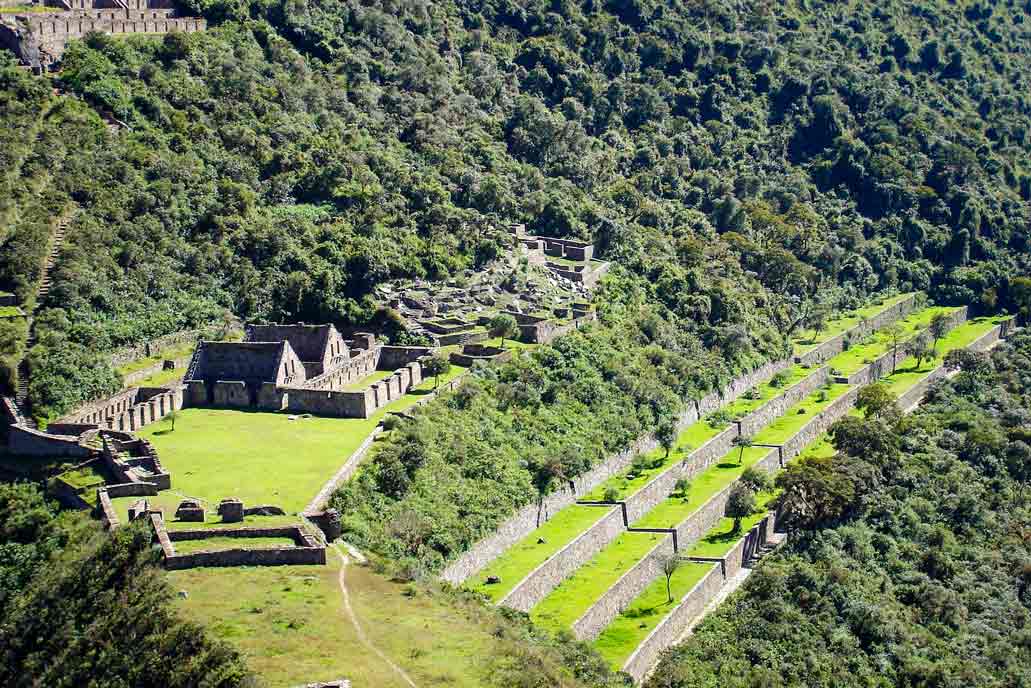
The ceremonial heart of the site covers 1,072 m² and is flanked by kallankas (great halls), temple structures, and storehouses fitted with precisely interlocked stone masonry laid without mortar — a hallmark of peak Inca construction technique.

Aerial editorial photo of Choquequirao Main Plaza Inca masonry Peru mountains

Choquequirao Main Plaza ruins Peru

Llamayoq Terraces (Llama Terraces)

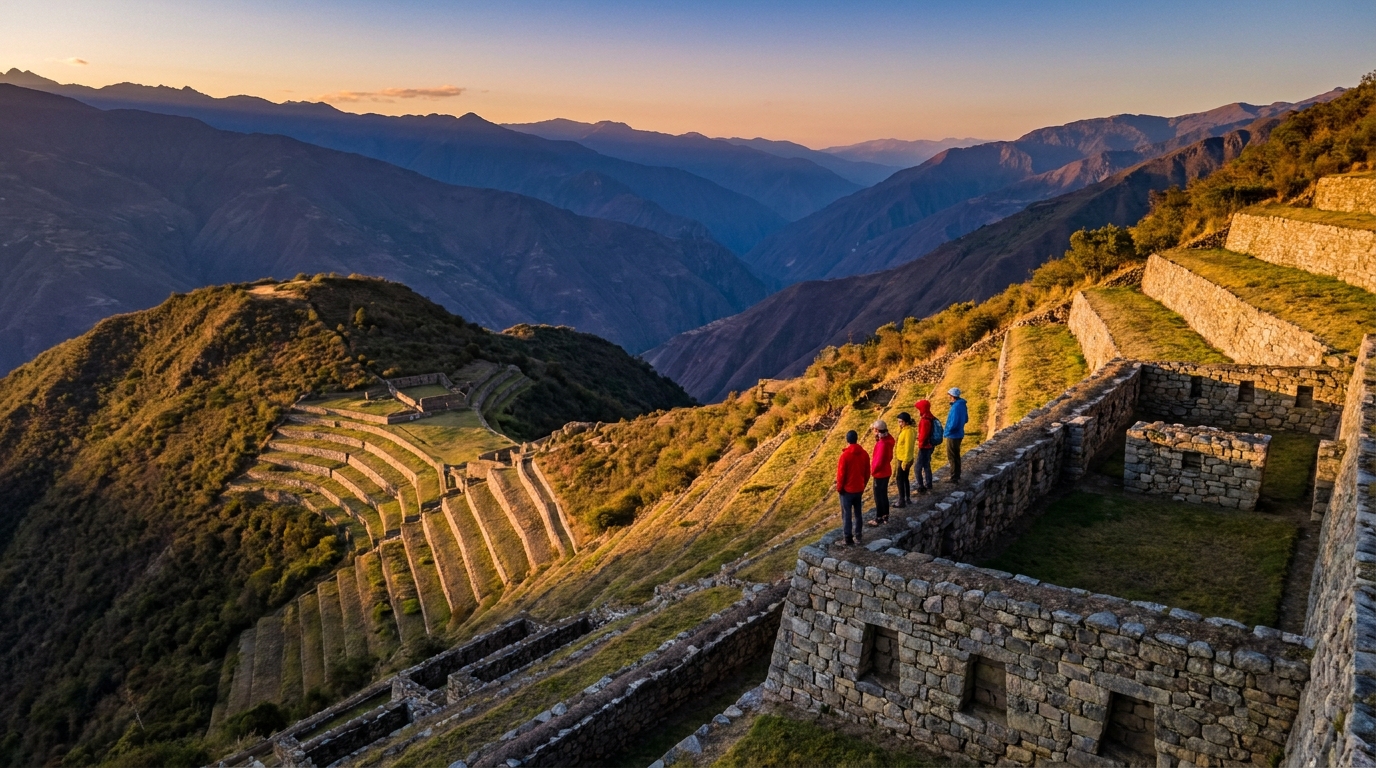
These agricultural terraces are inlaid with 24 white-stone llama figures marching in procession toward the Apurímac Canyon below — a form of decorative rock art unearthed in 2005 that archaeologists describe as unique anywhere in the Inca world.

Editorial photography of white stone llama figures on Inca terraces Choquequirao

Choquequirao llama terraces white stone figures

Ushnu (Sector V Ceremonial Platform)

An oval raised platform at the edge of a ridge giving an unobstructed 180-degree view of the Apurímac River and snow-capped peaks; Inca rituals linked to agriculture and solar cycles were conducted from this elevated stage.

Wide-angle editorial photo of Ushnu platform Choquequirao overlooking Apurimac canyon

Ushnu platform Choquequirao Apurimac viewpoint

Pikiwasi (Capilla Hill Sector)

The elite residential quarter contains a high-status dwelling identifiable by finer stonework and a channelled water system — the only structure at the site with what researchers interpret as a private shower and bath arrangement for an Inca noble.

Editorial photo of Pikiwasi elite residence stone walls Choquequirao Peru

Pikiwasi Choquequirao elite residential sector

Paqchayoq (Sacred Waterfall Sector)

A natural waterfall deliberately integrated into the ceremonial landscape of the citadel; the Incas incorporated it as a sacred water feature visible alongside the canyon below, following the Andean tradition of huaca — sacred places where water, rock, and sky converge.

Editorial landscape photo of Paqchayoq waterfall Choquequirao canyon Peru

Paqchayoq waterfall Choquequirao Peru

Compare

Choquequirao tickets & tours compared

Every Choquequirao tour side-by-side — duration, what's included, how you redeem.

Experience From Duration Transfers Pickup Lunch Tax inc. Free cancel. Price
Guided Experience
Choquequirao 4-Day Private Trek: The Lost Inca Citadel
96 hr €472 Book →
Premium Combo
Choquequirao Trek: 3-Day Expedition to the Lost Inca City
72 hr €476 Book →
Luxury / Private
Choquequirao Trek: The Lost Inca City – 5 Days / 4 Nights
120 hr €485 Book →
Standard Entry
Choquequirao 5-Day Trek: Lost City of the Incas
120 hr €691 Book →

All prices from verified partners. Availability and exact terms confirmed at checkout.

How your ticket works

Book Choquequirao tours in 3 steps

  1. 01

    Book online

    Choose your ticket, select your date, and reserve in under two minutes. Secure checkout handled by our verified partner.

  2. 02

    Receive your mobile voucher

    Instant confirmation by email, with a mobile voucher you can save offline. No printing, no queuing at a collection desk.

  3. 03

    Show & enter

    Arrive at the entrance, show your voucher on your phone, and walk in. Most tickets include priority or skip-the-line access.

Plan your visit

Plan your Choquequirao visit

Practical details for Choquequirao tickets straight from our verified partners — hours, access, rules, and how to get there.

Open today · 06:00 – 17:00
Opening Hours
06:00 – 17:00, daily
Opening hours
06:00 – 17:00
Getting there
City-center access via metro and bus
Accessibility
Most experiences are wheelchair-friendly — check individual tours
What to bring
Comfortable shoes, water, phone for mobile voucher
Mon
06:00 – 17:00
Quietest weekday on trail
Tue
06:00 – 17:00
Wed
06:00 – 17:00
Midweek; moderate trail traffic
Thu
06:00 – 17:00
Fri
06:00 – 17:00
Last entry strictly 17:00
Sat
06:00 – 17:00
Busier; weekend trekkers arrive
Sun
06:00 – 17:00
Main entrance

Cachora Village Plaza

Cachora, Abancay Province, Apurimac Region, Peru

Standard departure and mule-hire point for all choquequirao tours; most agencies meet groups here at 06:00.

Open in Google Maps
Getting there
City-center access via metro and bus
What to bring
Comfortable shoes, water, phone for mobile voucher

How to get there

🚆
Public transport · 3–4 hrs Cusco to Cachora · ~40 PEN bus + 5 PEN minivan

Take a bus from Cusco Terminal Terrestre toward Abancay (Cruz del Sur or Oltursa); ask to stop at Ramal de Cachora at km 148, then a shared minivan to Cachora village.

🚗
Car · ~3.5 hrs · 150–250 PEN depending on group size

Private taxi or van from Cusco directly to Cachora offers door-to-door comfort and flexibility for early morning starts.

🚶
Walk · 2 days each way · No cost beyond entrance fee

From Cachora village to the Choquequirao ruins is approximately 31 km on foot, involving a full canyon descent and ascent.

🚕
Taxi · 1.5–2 hrs from Abancay · 60–80 PEN

From Abancay city, a taxi to Cachora costs approximately 60–80 PEN and takes around 1.5–2 hours.

Dress code

Layered clothing is essential at Choquequirao: daytime temperatures at 3,050 m can reach 22°C while nights drop close to freezing. Wear moisture-wicking base layers, a warm fleece or down jacket, and waterproof outer shell. Sturdy ankle-support trekking boots with good grip are required on the steep schist-stone paths.

Bags & security

There are no bag-storage facilities or lockers at the remote site. Trekkers carry all personal belongings throughout the visit; mule hire is available from Cachora to transport heavy loads. Keep valuables on your person at all times, as the archaeological park has no staffed cloakroom.

Photography

Personal photography is permitted throughout the archaeological park without a fee. Drone operation requires prior authorization from Peru's Ministry of Culture and is not permitted without written approval. Tripods are allowed on the open terraces; flash photography inside any enclosed stone structure should be avoided to protect pigments.

Accessibility

The trek to the Inca citadel requires crossing a canyon descending to roughly 1,500 m and ascending steeply to 3,050 m over approximately 31 km from Cachora. The site itself features uneven stone paths, steep terraces, and no handrails. It is not accessible for wheelchairs or visitors with significant mobility limitations. Mule hire can assist with baggage but not with the walk itself.

Mobile phones

Mobile phone coverage is absent for most of the trekking route and at the ruins themselves. Download offline maps (e.g. Maps.me or Gaia GPS) before departing Cusco. A satellite communicator is recommended for independent trekkers venturing without a guide on the Cachora route.

What to bring

  • 60 PEN in cash (exact amount preferred) for entrance fee at Capuliyoc
  • Trekking poles (essential on steep schist paths)
  • Sleeping bag rated to −5°C for camping en route
  • 3+ litres water-carrying capacity plus purification tablets
  • High-SPF sunscreen and UV-protection sunglasses
  • Headlamp with spare batteries (for pre-dawn starts)
  • High-calorie trail snacks and electrolyte sachets

Not allowed

  • Drones (without Ministry of Culture permit)
  • Firearms and weapons
  • Fireworks and flares
  • Motorised vehicles on trekking trails
  • Alcohol and glass bottles inside the ruins
  • Plastic bags (single-use)
  • Hammers, chisels, or rock-collecting tools
  • Spray paint or marking materials
  • Open fires within the archaeological zone
  • Metal detectors
  • Commercial tripods without prior authorization

Families & strollers

Families with older children (12+) with solid hiking experience can undertake choquequirao tours, though the multi-day trek demands serious physical fitness. The route involves up to 10 hours of trekking per day. Children under 3 do not pay the site entrance fee. Pack high-energy snacks, electrolyte supplements, and sun protection for younger trekkers.

Food & drink

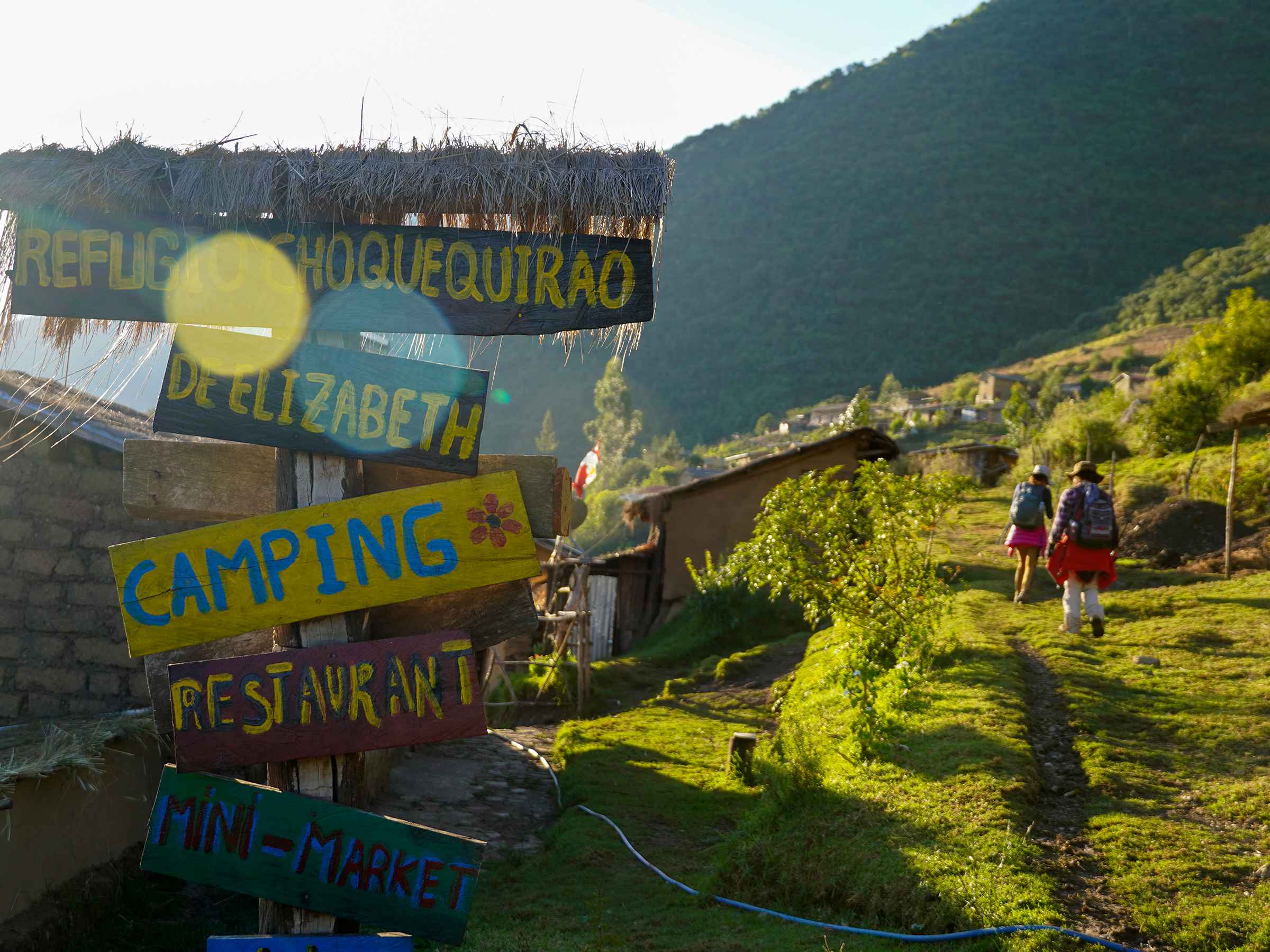
There are no restaurants inside the archaeological park itself. Simple kiosks and campsites along the Cachora trail offer basic meals and water. Trekkers should carry at least 3 litres of water per day and purification tablets, as natural water sources require treatment. Bring sufficient high-calorie trail food for the duration of your trek.

Pets

Pets are not permitted within the Choquequirao Archaeological Park. The surrounding area is protected habitat for Andean condors, spectacled bears, and cloud-forest bird species, and domestic animals pose a disturbance risk.

Good to know

Altitude sickness (soroche) is a real concern: the trail climbs to 3,050 m after descending to canyon floor at roughly 1,500 m. Spend at least two nights acclimatising in Cusco before beginning the trek. Coca leaves or acetazolamide (consult a physician) are widely used preventive measures among trekkers on the Cachora route.

Meeting points

Choquequirao tour meeting points

Cachora Village Plaza

Cachora Village Plaza

Cachora, Abancay Province, Apurimac Region, Peru

Standard departure and mule-hire point for all choquequirao tours; most agencies meet groups here at 06:00.

Get directions

Capuliyoc Checkpoint

Capuliyoc pass on Cachora–Choquequirao trail

Entrance fee of 60 PEN collected here; bring exact cash. Last point with reliable phone signal.

Get directions
Around your visit

Choquequirao — everything else worth knowing

Best time to go, insider tips, nearby landmarks, and the cancellation fine print — flip through to skim what matters to you.

Best time to visit Choquequirao

How crowds, weather, and events shift across the year.

May – June

Dry season onset with lush post-rain greenery; minimal rainfall and clear views; June is peak condor-watching month.

Helpful tips for your visit to Choquequirao

Small details that turn a good visit into a great one.

Start the descent from Cachora before dawn

Temperatures on the canyon descent can reach 35°C by midday; leaving Cachora by 05:00–06:00 keeps you in shade for the steepest sections and gets you to camp before the worst heat.

Bring exact change for the entrance fee

The Capuliyoc checkpoint collects 60 PEN per foreign adult in cash only; change is rarely available on-trail, and the nearest ATM is in Abancay city.

Hire a mule for your heavy pack

Muleteers in Cachora charge approximately 40 PEN per mule per day; carrying a 15 kg pack on the canyon ascent significantly increases the risk of knee injury and altitude fatigue.

Watch for condors between 08:00 and 10:00

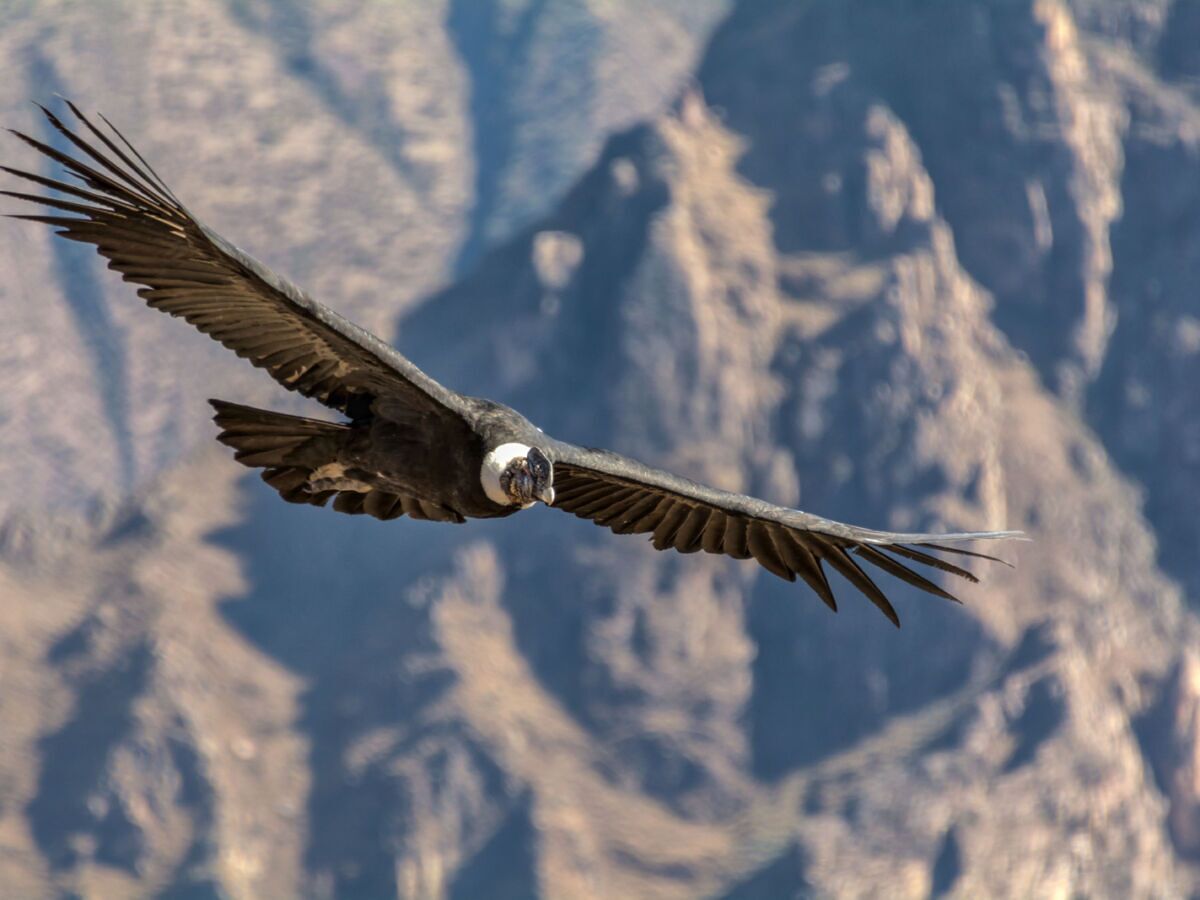
Andean condors catch the first thermal columns rising from the Apurímac Canyon in the early morning; the area below the Ushnu platform is one of the most reliable viewing spots in June and July.

Acclimatise in Cusco for two nights minimum

The ascent to 3,050 m after canyon descent at 1,500 m is a rapid gain; trekkers who skip acclimatisation in Cusco report significantly higher rates of altitude headache at camp.

Download offline maps before leaving Cusco

Mobile coverage disappears before Capuliyoc; apps such as Maps.me with the Apurimac region downloaded allow accurate trail navigation without a guide.

Landmarks near Choquequirao

Non-bookable sights within a short walk — free to visit, easy to pair.

Capuliyoc Viewpoint

Capuliyoc Viewpoint

On-trail (2 hr from Cachora)

First panoramic overlook of the Apurímac Canyon and Nevado Salkantay, used as a rest and orientation point.

Apurímac Canyon Condor Thermals

Apurímac Canyon Condor Thermals

On-trail (canyon rim)

One of Peru's top spots for watching Andean condors riding morning thermals above the deepest canyon sections.

Marampata Village

Marampata Village

~1 hr below ruins

Small farming community with basic accommodation and local food; a staging camp for early morning ruin access.

Nevado Salkantay (distant view)

Nevado Salkantay (distant view)

Visible from Capuliyoc

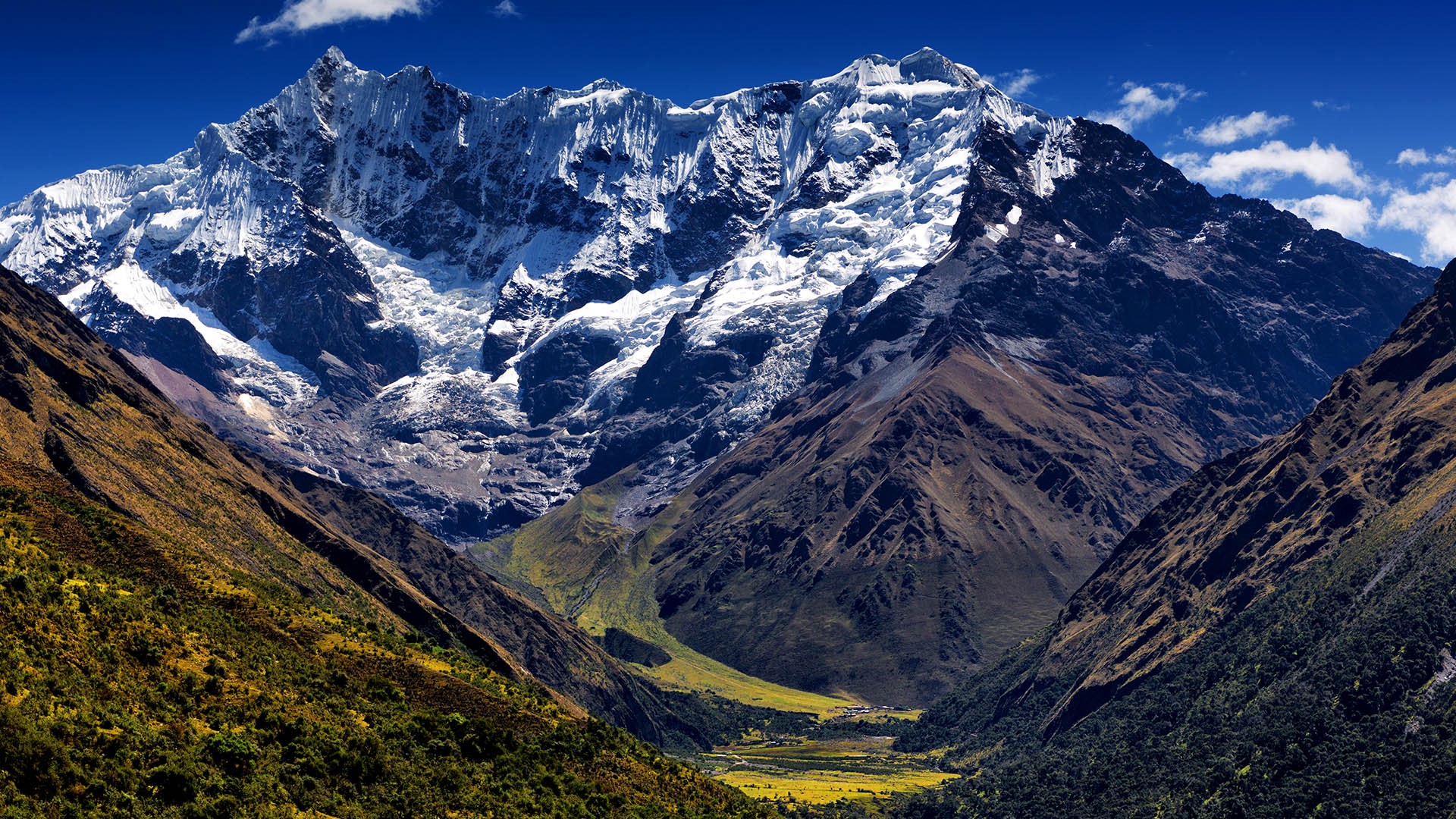
Highest peak of the Vilcabamba range at 6,271 m; visible on clear dry-season mornings from the upper trail sections.

Cancellation policy

Flexible, no hidden fees.

Choquequirao entrance fees of 60 PEN are paid in cash in person at the Capuliyoc checkpoint and are non-refundable once collected. Tour operators offering guided choquequirao tours typically apply a 72-hour cancellation window for a full refund; cancellations within 24 hours are generally non-refundable — confirm exact terms with your operator before booking.

Where to stay

Hotels & districts near Choquequirao

Hand-picked options within walking distance — pick a district for vibe, or a specific hotel for convenience.

Hostal Cachora

Hostal Cachora

In Cachora village
budget

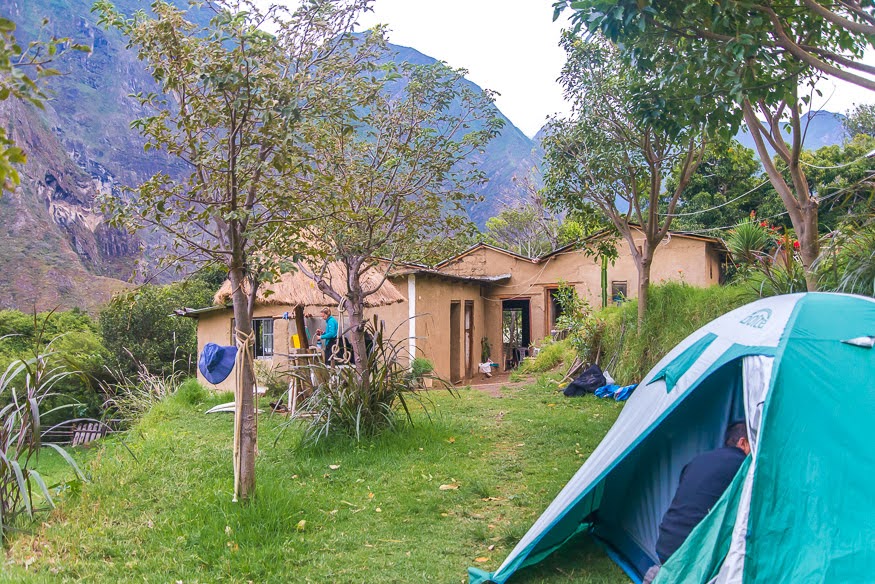
Basic rooms and camping pitches; the standard first-night stay for all trekkers, with mule-hire services arranged on-site.

Marampata Campsite

Marampata Campsite

~1 hr below ruins
budget

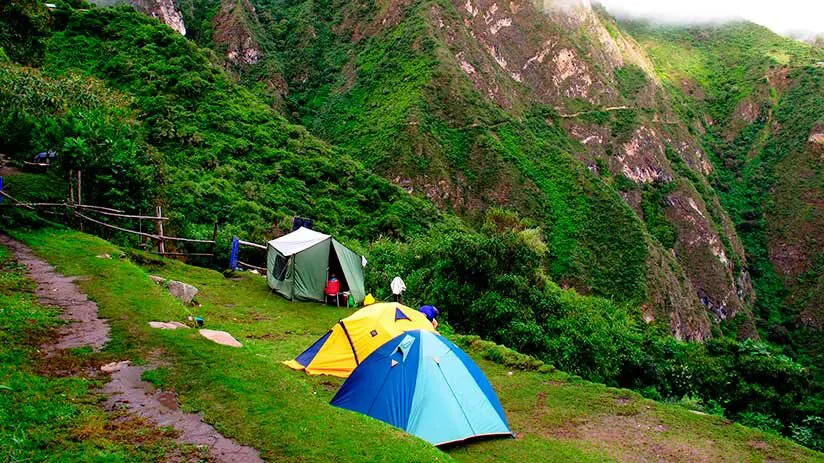
Community-run tented camp with basic meals; ideal base for early morning access to the site at 06:00.

Abancay Hotels (district)

Abancay Hotels (district)

~2 hr drive from Cachora
mid-range

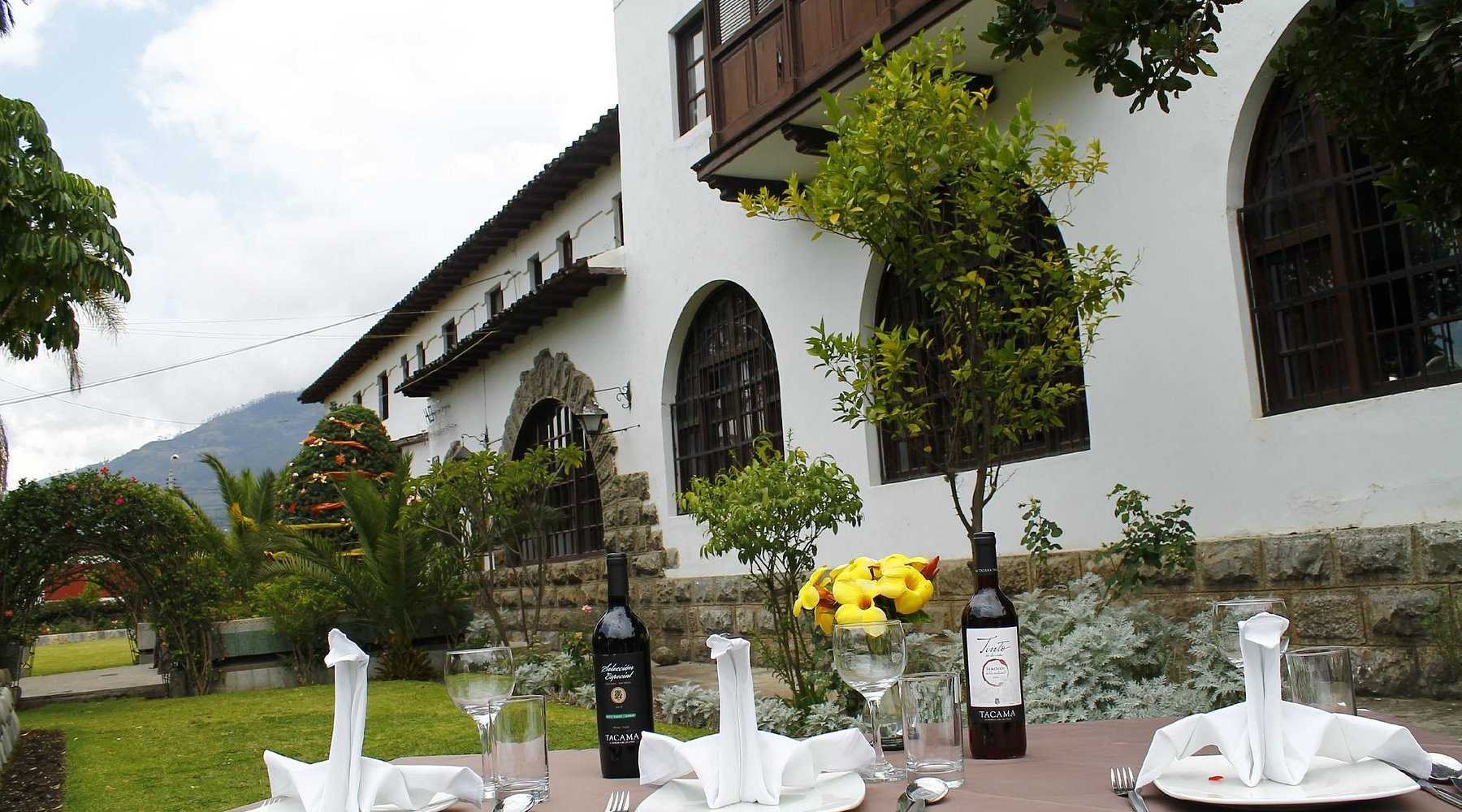
Abancay city offers the nearest mid-range hotels with en-suite bathrooms and reliable hot water for pre- or post-trek recovery.

Cusco Boutique Hotels (district)

Cusco Boutique Hotels (district)

~4 hr drive
boutique

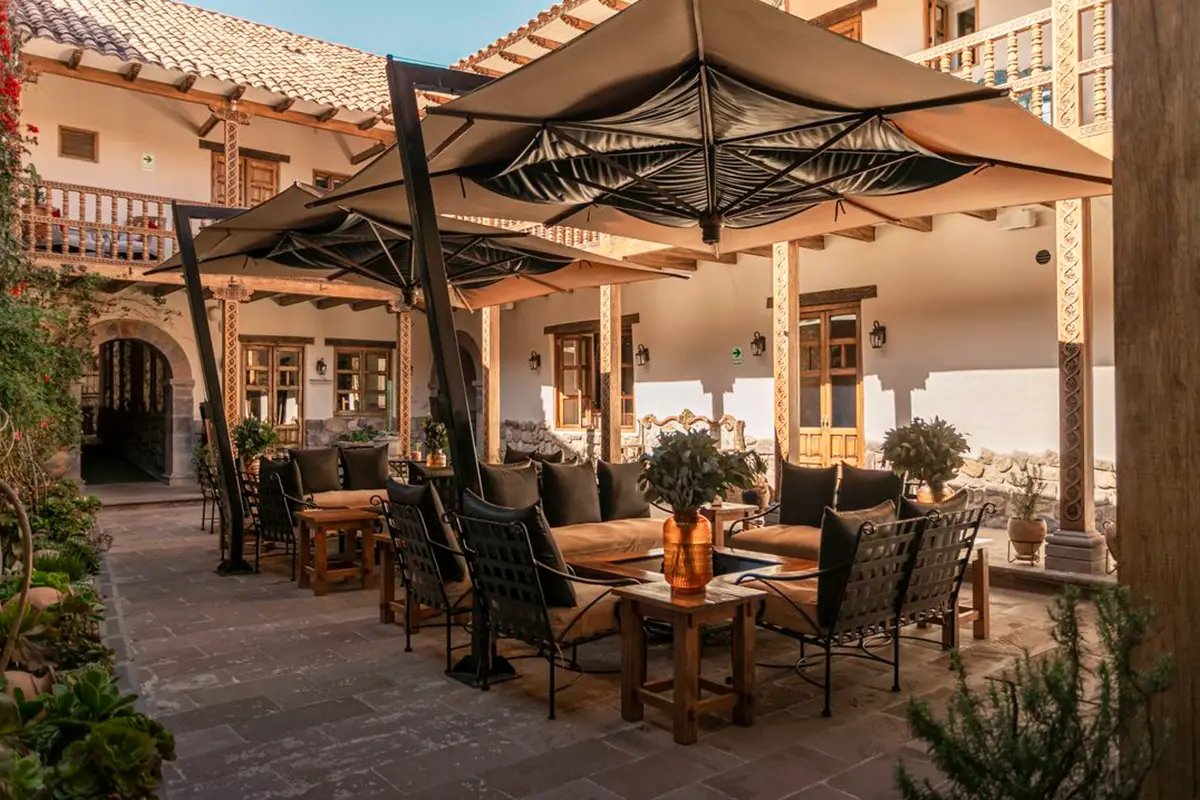
Wide choice of boutique and mid-range hotels in Cusco's historic centre; ideal base for acclimatisation and tour logistics.

Traveler reviews

Choquequirao tour reviews

4.7
★ ★ ★ ★ ★
2,400 reviews
41K+ travelers chose this
  • "Four-day round trip and my legs still remember it. We reached choquequirao mid-morning with almost nobody else around, just wind and the sound of the canyon. The llama terraces on the lower side were the highlight, carved white figures glowing against dark stone."
    Marcus T. · United States · 2026-05-22
  • "Booked one of the choquequirao tours from Cusco and it was the best decision of the trip. Compared to other Inca citadels we had the ruins almost to ourselves at dawn. Bring more water than you think for the climb out of the gorge."
    Lucia F. · Spain · 2026-04-30
  • "The descent into the Apurimac valley was brutal in the heat but worth it. By afternoon clouds rolled over the upper plaza and the temperature dropped fast, so pack layers. A guide really helps you read the terraces and the ceremonial platform."
    Hiroshi N. · Japan · 2026-03-15
  • "We did the trek over five days and the campsites were basic but clean. The site itself is only partly excavated which made it feel raw and real. Mules carried our gear, which saved my knees on the steep sections."
    Anika R. · Germany · 2026-02-08
  • "Got up before dawn to catch first light hitting the agricultural terraces and had the whole upper section to myself. The scale of the Apurimac canyon is hard to describe until you stand on the edge. One of the few Cusco landmarks where you still feel like an explorer."
    Daniel O. · Brazil · 2025-12-19
  • "Our choquequirao tour guide knew every corner of the ruins and the history behind the llama mosaics. The trail is dusty and exposed in the middle of the day, so an early start matters. Saw condors riding the thermals above the gorge on the way back."
    Sophie L. · France · 2026-01-27
  • "Three long days of walking and barely a dozen other trekkers the whole time. The stonework on the main plaza is in beautiful condition and the views across the valley change with every cloud. Knees took a beating on the descent so trekking poles are essential."
    Tom B. · United Kingdom · 2025-11-11
  • "Sorted our choquequirao tickets and permits through a local operator and everything ran smoothly. Reaching the citadel after the climb felt like a genuine accomplishment rather than a bus stop. Spring weather meant green slopes and wildflowers along the path."
    Camila S. · Argentina · 2025-10-03
  • "We started the trek at first light to beat the canyon heat and reached camp by dusk. Standing among the terraces with no crowds was the closest I have felt to stepping back in time. The night sky over the Apurimac was unreal."
    Erik H. · Sweden · 2025-08-21
  • "The trail out of the gorge in afternoon sun was the hardest part of any trip I have done. The ruins reward you with quiet, scale and incredible masonry. Hire a guide and rent mules if your knees are not what they used to be."
    Priya M. · India · 2025-06-29
1★
180
2★
210
3★
640
4★
2100
5★
9200
Frequently asked

Frequently asked questions about choquequirao tours

What is the entrance fee for choquequirao and where is it paid?

The entrance fee for choquequirao is 60 PEN per foreign adult, paid in cash at the Capuliyoc checkpoint at the start of the trail. There is no online booking platform; payment is strictly in person. Children under 3 enter free.

What are the opening hours of the choquequirao archaeological park?

The choquequirao archaeological park is open daily from 06:00 to 17:00, including weekends and public holidays. Arriving between 06:00 and 09:00 is recommended for cooler temperatures and fewer trekkers at the ruins.

How do I get to choquequirao from Cusco?

From Cusco, take a bus toward Abancay from Terminal Terrestre and ask to stop at Ramal de Cachora (km 148), approximately 3–4 hours away. From there, a shared minivan covers the final 16 km to Cachora village, the trailhead for the 31 km trek to the ruins.

What is the best time of year to visit choquequirao?

The dry season from May to September offers the most reliable trail conditions. June and July are peak months with clear skies, optimal condor-watching, and stable paths, though visitor numbers are at their highest. May and September are excellent shoulder months with fewer trekkers.

Is a guided choquequirao tour necessary, or can I trek independently?

Independent trekking to this remote Inca citadel is possible if you speak some Spanish and carry sufficient supplies. Hiring a licensed local guide enriches the experience considerably, as the site spans 12 sectors and less than 40% has been excavated. Most choquequirao tour operators include guide, mule support, meals, and camping gear.

How many days does a choquequirao trek take?

A standard out-and-back choquequirao trek from Cachora takes 4 to 5 days, covering approximately 62 km round-trip with a significant canyon descent to 1,500 m and ascent to 3,050 m. Extended itineraries continuing to Machu Picchu take 8 to 9 days.

What should I pack for a choquequirao expedition?

Essential items include 60 PEN in cash for the entrance fee, trekking poles, a sleeping bag rated to −5°C, 3-litre water capacity with purification tablets, high-SPF sunscreen, a headlamp, and high-calorie trail snacks. Layers for both 22°C days and near-freezing nights are critical.

Are choquequirao tickets available online in advance?

No, choquequirao tickets cannot be purchased online. The 60 PEN entrance fee is collected face-to-face at the Capuliyoc checkpoint on the trail. Bring exact cash as change is rarely available at the remote checkpoint.

What are the main landmarks to see inside the Inca citadel?

The five key areas are the Main Plaza (Plaza Principal) with its finely fitted Inca masonry, the Llamayoq Terraces decorated with 24 white-stone llama figures, the Ushnu ceremonial platform overlooking the Apurímac Canyon, the Capilla Hill (Pikiwasi) elite residential sector, and the Paqchayoq waterfall sector.

Is choquequirao suitable for families with children?

Families with physically fit children aged 12 and above can complete a choquequirao trek with preparation. The multi-day route demands up to 10 hours of hiking per day on steep terrain. Children under 3 do not pay the entrance fee. Hiring mules for baggage is strongly advised with younger trekkers.

Can I see Andean condors on the trail?

Yes. The Apurímac Canyon below the ruins is one of Peru's top locations for Andean condors, which ride morning thermals between roughly 08:00 and 10:00. June through August provides the most reliable sightings due to dry, windy conditions.

What nearby attractions can I combine with a choquequirao visit?

The Capuliyoc viewpoint offers the first panoramic view of the canyon and Nevado Salkantay on the approach trail. For a longer expedition, the 8- to 9-day route connects the Inca citadel with Machu Picchu, passing through remote Andean passes and cloud forest.
Keep exploring

More Choquequirao tours & experiences

Nearby cities & day trips
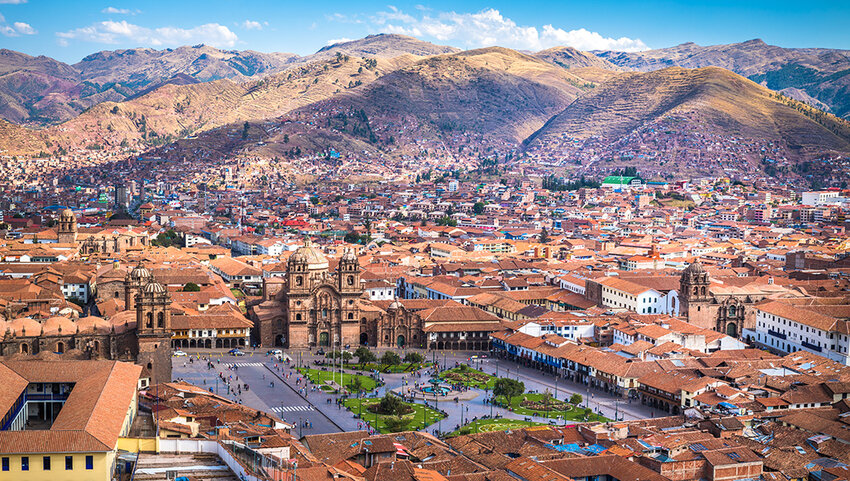
Cusco
4 hr drive to Cachora trailhead; main trip hub